
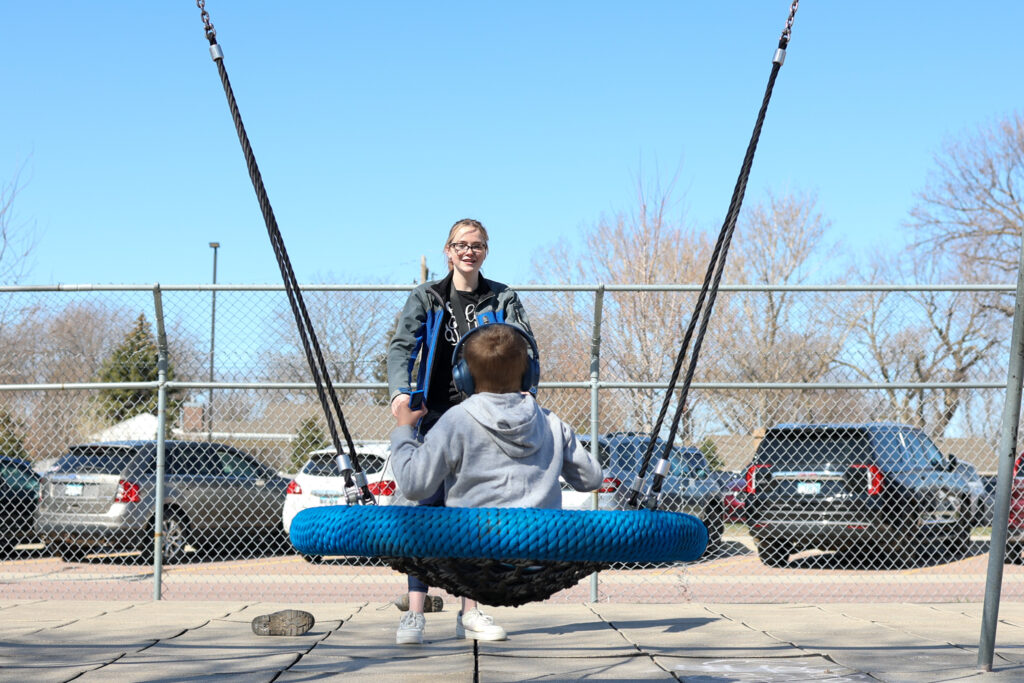
The new facility is taking shape. Unique features include the number of swings located throughout. Swings are an important part of learning and therapy for the children. The following information explains how and why swings are utilized with children at LifeScape.
Sensory swings have become an increasingly important tool for kids, offering a unique form of sensory input, they offer a wide range of benefits that are supported by scientific research. They can mimic the feeling of movement and balance that a child experiences during activities like walking or running, but in a more controlled and focused way. For children with sensory processing disorders, these swings can help regulate their sensory systems. For example, a child who is overly sensitive to touch or movement may find the gentle rocking of a sensory swing to be calming and centering. Many children with ADHD benefit from constant movement to maintain focus. Swinging provides a safe and structured way for them to satisfy this need while engaging in a beneficial activity.
Emotional Regulation: Sensory swings can play a vital role in emotional regulation. For autistic children who struggle with managing their emotions, the swing can provide a calming and grounding experience. The physical movement can help them process and express their emotions in a more controlled way. For example, a child who is feeling angry or frustrated may find that swinging helps them release that negative energy in a positive manner. It gives them a physical outlet for their emotions, rather than acting out inappropriately.
Improved Focus: Sensory swings can also enhance a child’s focus. When a child is in the swing, they are required to maintain their balance and control their body movements. This physical engagement activates the proprioceptive system, which is responsible for our sense of body position and movement. By stimulating this system, the child becomes more aware of their body in space. This increased body awareness can then translate into better focus in other areas such as academic tasks.
Physical Coordination: The swinging motion of the sensory swing challenges a child’s physical coordination. As the swing moves, the child has to adjust their muscles to maintain balance and stability. This constant adjustment helps develop gross motor skills, such as balance, strength, and spatial awareness. It can be especially beneficial for children who are clumsy or have delays in their physical development.
Enhanced Vestibular System: The vestibular system, which is located in the inner ear, is responsible for our sense of balance and spatial orientation. Sensory swings provide a rich source of vestibular input. When a child swings, the fluid in their inner ear moves, sending signals to the brain about their position and movement. This stimulation helps develop and strengthen the vestibular system.
Other unique features include reinforced sheetrock, weighted furniture, hurricane glass windows, and other features that help keep kids safe in the behavior care areas of the facility. The hospital rooms all have overhead lifts and single rooms have space for parents to room-in with their child as they recover from illness or surgery. Many good questions were asked on donor tours of the construction site this fall. Please see the frequently asked questions from fall donor tours for more information. We’ll be hosting more tours this spring.